Bee You Tiful Sublimation Design: A Practical Asset for Creative Workflows
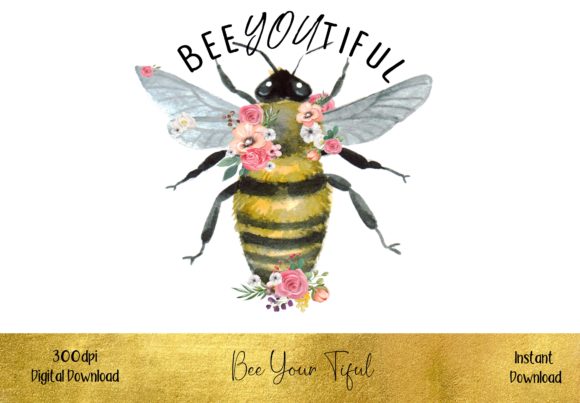
The Bee You Tiful Sublimation Design is more than just a beautiful graphic; it's a versatile digital asset designed for integration into professional and hobbyist creative processes. This 300dpi PNG file, featuring a stunning watercolour floral bee paired with the motivational "bee-you-tiful" text, functions as a high-quality component ready for deployment across a multitude of projects. Understanding its role within a broader workflow—from preparation to final output—is key to leveraging its full potential efficiently and effectively.
Understanding the Asset's Role in Your Creative Process
Every creative or commercial project follows a sequence, whether formally planned or organically developed. The Bee You Tiful Sublimation Design enters this sequence as a core visual element. Its utility spans the entire timeline: during the initial planning and concept phase, as a design element being applied during execution, and as a final embellishment on a finished product. For a small business owner producing branded merchandise, this file is a purchased resource that eliminates the need for custom illustration, saving time and cost. For a hobbyist crafting personalized gifts, it's a ready-to-use artistic centerpiece that ensures a polished result without advanced drawing skills.
The design's format and specifications directly influence how it interacts with other tools in your workflow. The provided 300dpi PNG file is a raster image, meaning it consists of pixels. This makes it inherently compatible with image editing software like Adobe Photoshop or Affinity Photo, where it can be resized, color-adjusted, or combined with other layers. While it's not a vector file (like those created in Illustrator or CorelDraw), the high 300dpi resolution allows for significant resizing without noticeable quality loss for typical sublimation or print purposes, a crucial factor for maintaining professional output quality.
Pre-Project Preparation: Software and Setup
A smooth workflow begins with proper preparation. Before the Bee You Tiful Sublimation Design can be utilized, you must ensure compatibility with your operational environment. This means verifying you have access to, and basic knowledge of, the appropriate design software. The requirement for software such as Adobe Photoshop, Illustrator, CorelDraw, or Affinity is not a mere suggestion; it's a practical necessity for opening, manipulating, and preparing the file for your specific end-use.
Organize your digital workspace. Create a dedicated project folder and place the downloaded PNG file there alongside any other assets, templates, or client briefs. This simple step of organization prevents file misplacement and streamlines the later stages of your process. Check the file's properties to confirm its resolution and dimensions, aligning them with the requirements of your sublimation printer or digital printing service. This upfront quality control prevents disappointing outputs later and reinforces efficient execution.
Integration During Project Execution
With preparation complete, the design becomes an active component in your project execution. Its application varies dramatically based on the end goal, but the workflow principles remain consistent. For sublimation onto apparel like T-shirts or onto items like mugs and cushions, the process involves importing the Bee You Tiful Sublimation Design into your design software, positioning it within a template that matches the product's print area, and ensuring the colors and sizing are optimal for transfer.
Consider interaction with other resources. You might combine this floral bee motif with text from a separate branding file, or place it alongside other clipart elements in a collage for a bag design. The PNG's transparency (assuming a clear background) is key here, allowing it to overlay seamlessly onto other images or colored fabrics. For non-sublimation uses, such as digital scrapbooking, creating stickers, or planner decoration, the process might involve importing the file into a different platform like Canva or a dedicated scrapbooking app. The focus shifts to composition and layout rather than heat press settings, but the core action of integrating a pre-made, high-quality asset to accelerate creation is identical.
Practical Implementation Tips for Diverse Use Cases
To move from theory to practice, consider these workflow-oriented observations for specific applications.
- Sublination Merchandise Production: After sizing the design in Photoshop, mirror the image for transfer. Consistency is vital; create a saved preset for this Bee You Tiful design so that every mug or T-shirt in the batch uses the exact same positioning and dimensions. This standardizes quality and speeds up batch processing.
- Paper Crafting and Scrapbooking: Here, the digital workflow might involve printing the design onto specialty paper. Test print a small section first to check color fidelity from your inkjet or laser printer against your expectations from the screen. This step integrates the digital asset with your physical printing tools, a critical interface point.
- Digital Content Creation: Bloggers or educators might use the design in digital prints or online graphics. When resizing for web use, remember that 300dpi is higher than necessary for screens; downsizing the resolution to 72-96dpi will reduce file size for faster website loading without affecting visual clarity on monitors.
The long-term use of such a design file also warrants consideration. Store the original high-resolution 300dpi PNG in a permanent digital archive, labeled clearly. This allows you to return to it months or years later for a new project line, ensuring you always work from the best quality source. This practice turns a single purchase into a reusable asset within your ongoing creative or business operations.
Workflow Efficiency and Outcome Consistency
Integrating a pre-made design like the Bee You Tiful Sublimation Design primarily boosts efficiency and ensures consistency. Efficiency gains are clear: it bypasses the time-intensive stages of conceptualizing, sketching, and digitally painting a similar illustration. The time saved is reinvested into other workflow stages—market research, customer communication, or actual production.
Consistency is a key outcome, especially for business users. If this bee motif becomes part of your brand's visual identity for a seasonal product line, using the exact same file across all items (bags, cushions, stickers) guarantees uniform appearance. This professional consistency strengthens brand recognition and customer trust. For personal hobby projects, it ensures that every gift or craft item maintains a high standard of aesthetic quality, turning a fun activity into a reliably satisfying process.
Adapting the Asset to Your Unique Process
Ultimately, the most effective workflow is your own. The Bee You Tiful Sublimation Design is a flexible tool. A freelancer might use it immediately upon receipt to fulfill a client's quick-turnaround order. A planner enthusiast might keep it in a digital library, deploying it only when a relevant theme or mood strikes. Entrepreneurs might incorporate it into a broader decision-making process, testing it on a few sample products before committing to a full inventory run.
The design interacts not just with software and printers, but with people and decisions. It can be shared with a production partner, attached to a client email for approval, or presented as an option in a team meeting. Its role evolves based on your needs. By treating it as a core component within your systematic approach to creation—respecting its technical requirements, organizing it thoughtfully, and applying it with intention—you transform a fabulous sublimation print into a catalyst for streamlined, professional, and beautiful outcomes.